
Updates
Are you concerned about where emergency medicine is going and who is working for your personal concerns? Emergency physicians face a wide variety of challenges in an era of rapid change. We must be united to protect our specialty and to protect our patients. The Colorado Chapter of Emergency Physicians is your voice for those concerns!
Advocacy
One of the most important values of Colorado ACEP membership is having your rights and interests represented at the state capitol. As a strong, unified professional organization we have taken many steps to empower physicians and to protect our patients. We have enjoyed several important successes as a result, including but not limited to:
- Reimbursement
- Medical Liability Reform
- Emergency Medical and Prehospital Services
- Statewide Trauma
CoACEP Small Donor Committee
One of the important values of Colorado ACEP membership is having your rights and interests represented at the State Capitol. As a strong, unified professional organization, it is imperative that we be proactive at the Capitol to protect our practices and to ensure we are able to provide the best quality care possible of our patients. To that end, Colorado ACEP would like to invite you to contribute up to $50 annually to the Colorado ACEP Small Donor Committee. This money will go a long way to help us continue to fight for you and to expand our influence at the legislature. Contribute here!
Important Legislative Links
From the Capitol – Interim 2025
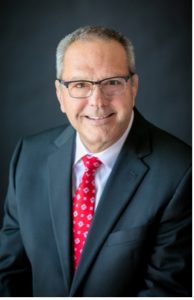 Dan Jablan
Lobbyist, CO ACEP
You can really tell its summer when the Colorado Rockies are struggling so much, currently on track to set the record for the worst baseball season ever, with a possibility of losing 137 games. But the average home game attendance at Coors Field is still in the top half of MLB teams. In 2023, the average was 32,196 per game. That fell to 31,360 in 2024. This year’s average home game attendance so far is 28,518.
Governor Polis signed 476 bills into law and vetoed 11 this session. Lawmakers presented him with 487 measures for action. The 11 vetoes (8 House bills and 3 Senate bills) mark a record high for Polis. These vetoes reflect policy differences with progressive Democrats and a decline in the Governor’s influence.
There are ongoing rumors about a special session being called to address potential budget shortfalls that might result from federal legislation. Yet another incumbent lawmaker has resigned, and more hopefuls are just lining up for the 2026 statewide and congressional races.
SENATE GOP LEADER RESIGNS
Senator Paul Lundeen (R) resigned his seat on June 9 to take a job with the Washington DC American Excellence Foundation, after serving 4 years in the House and 7 years in the Senate, including serving as minority leader since 2023. A (nother) vacancy committee will select his replacement for Senate District 9 in El Paso County.
Senator Cleave Simpson from the San Luis Valley was chosen by his Republican colleagues as the next Minority Leader, and Senator Lisa Frizell of Castle Rock will serve as the Assistant Leader.
About 1 in 5 state lawmakers in Colorado were appointed to their seats through a partisan vacancy committee. Under a new law just signed by Governor Polis, the vacancy committee process will require broader voter participation and transparency.
WATCH ME NOW
You’ll soon be able to watch legislative committee hearings live. Leadership has approved a pilot program for video livestreaming in select committee rooms, beginning this August and running through the end of the year.
Most interim committees and the Joint Budget Committee will participate in the pilot. Staff will carefully analyze the costs and resources needed to livestream all hearings during the 2026 session.
Currently, Colorado is the only state in the nation that does not provide video livestreams of its legislative committee hearings.
REVENUE FORECAST “UNCERTAIN” AND “BLEAK”
• The Joint Budget Committee heard the June quarterly revenue forecast from the Legislative Council and the Governor’s Office of State Planning and Budget (OSPB). State economists describe the budget forecast as “uncertain.” A few key takeaways:
• The likelihood of a recession has increased to 50%.
• The State will be nearly $700 million in the hole for the budget year that begins July 1, 2026.
• The federal budget bill could cost Colorado $300 million to $700 million in general fund revenue, according to the OSPB forecast.
• OSPB revised downward its general fund revenues estimate for 2025-26 by $177 million and for 2026-27 by almost $500 million.
• The TABOR surplus is likely to be at its lowest expectations in years.
• Legislative Council economists said the General Fund reserve is expected to be below the reserve requirement in all three years of the forecast period.
• Individual income tax revenue declined in the current fiscal year, which ends on June 30, by $435.2 million. Corporate income tax revenue is also expected to decline in 2025-26 and 2026-27, according to OSPB, due to weaker business expectations and lower corporate profits. In 2025-26, that’s $46.3 million less, and in 2026-27, it’s $105.6 million less.
• OSPB also predicted “weakened” sales and use tax revenue, with $53.5 million less in 2025-26 and $53.8 million less the following year, driven by “consumer weakness,” tariffs, and inflation
The JBC will meet again on Sept 22 for the third quarterly revenue forecast. By that time, they expect to have a better understanding of the impact federal actions will have on the state budget and the potential necessity of a special session in Colorado.
SPECIAL SESSION UP IN THE AIR
Colorado lawmakers are rumored to be called back into special session later the week of August 18th to address the implications of H.R. 1, also known as the One Big Beautiful Bill Act. It will likely include massive cuts to state funding for Medicaid, food programs, federal grants to state and local governments, higher education funding, and taxing tips and overtime pay. Combined with the higher chances of a recession, rising unemployment rates, tariffs on international trade, and geopolitical tensions, this could result in a budgetary shortfall from $1.6 to $2.6 billion.
Another issue for discussion during a special session may be Artificial Intelligence. SB 24-205 is scheduled to take effect on February 1, 2026; however, many believe a delay is necessary, as it may conflict with federal AI regulations and the deadline is challenging to meet.
2025 INTERIM COMMITTEES TO MEET
During legislative gaps, there are usually over dozen interim committees to review future legislation. This year, budget limits led to a bill restricting both committee numbers and bills introduced. Committees scheduled to meet this interim include the Treatment of Persons with Behavioral Health Disorders in the Criminal and Juvenile Justice Systems. Historically this committee has introduced legislation that crosses from the justice system into the emergency departments. This legislative interim committee has met over the summer and will approve legislative proposals on August 15. Those proposals will be introduced in the 2026 Legislative Session.
Additionally, the Joint Budget Committee (JBC) met on June 18 to hear the June Quarterly Revenue Forecast and will meet again on Sept. 22 for the September Quarterly Revenue Forecast. The passage of the One Big Beautiful Bill Act (OBBBA) will now place the state financing of the Colorado Medicaid program front and center in JBC deliberations.
KEY Dates
Last day for submitting a proposal to the Legislative Council for the 2026 election is March 20, 2026. Last Title Board for the 2026 election is April 15, 2026. Last day to submit signatures to the Secretary of State for the 2026 election is August 3, 2026.
We encourage you to engage in this process. Your ability to maintain a successful practice in Colorado is constantly at risk. If you are unable to give your time to the cause, please consider donating to the CO ACEP Small Donor Committee. This committee was formed to maximize CO ACEP’s voice at the Capitol. A $50 contribution is all it takes to make an impact. Contribute here!
Our legislators appreciate hearing from and rely on the expertise of Emergency Physicians, especially those that live or work in their districts! You can meet or talk to your legislators individually or help provide testimony. Testifying is easy – you can participate via zoom. We were thankful for the participation of many of our members on our Friday legislative sessions this year and will continue that in the next session. The second session of the 75th General Assembly beginning January 14, 2026!